Wednesday, 14 March 2012

Vietnam Part 3: Food For Thought

It pains me to say this but you're reading the third and final post about Vietnam. I could've easily written at least six posts about our adventures here but Big Boss Man Lakha told me not to, and I think he's right (for once.) So with a limitation on my creative flow, I'll have to prioritise the content and you know what that means.. Sorry non-foodies but there's gonna be a whole lotta food in the second half of this one!

Let's start with the point at which we left off in Part 2. After visiting the central regions of Danang and Hoi An we went to the south central highlands of Dalat and finished in Saigon (or Ho Chi Minh City.) Bearing in mind what I said in Part 1 about the motorbikes in Vietnam you'd be forgiven for thinking we weren't interested in being one of the 40 people a day who die because of those things. Au contraire, my friend, for we went to Dalat for one reason: to jaunt with the Easy Riders.

The Easy Riders are basically motorbike drivers who take you anywhere you want to go. We spent a day just seeing the whole of Dalat with them but you can ride with them for weeks all over Vietnam. Now that IS bonkers. With the wind in our hair and an open road in front of us (kinda), we saw Dalat in the best possible way. Relative to their comrades in the other cities, Dalat drivers are quite chilled out and we only feared for our lives about twelve times as opposed to twenty and just knocked the one pedestrian down. Excellent going!


On our Easy Rider tour we visited artichoke and strawberry farms, coffee bean plantations, silk worm factories, ethnic villages, beautiful pagodas and countless other sights. All nice enough. There was a waterfall park which we got to by way of a mini roller coaster that we controlled ourselves - THAT was fun! Our favourite, however, was a stunning Buddhist Monastery. It was peaceful, spotless, smelt of the many flowers growing all over the grounds and had young monks in orange tunics tending the trees and hedges. It's no secret that clueless tourists grate on me so you can imagine how unimpressive the French couple who decided to start snogging in front of a shrine were. I mean, seriously? But what made me laugh was that the monk who kicked them out did so in such a composed, graceful and gentle manner that they didn't actually realise why they were being chucked out and left looking highly bewildered.


Dalat's known as a popular honeymoon destination and a beautiful part of Vietnam. Truthfully? - I really didn't get why. There are some pretty French-style villas around to drive past and lots of lovely flower farms but the views from the hills weren't special enough for me to understand the honeymoon attraction. Imran, on the other hand, loved it. Strange, as usually I'm the one who finds beauty in our surroundings more easily but we don't mind a role reversal when travelling! There's a great deal of Parisian influence in dirty and impossible to navigate Dalat town. It hence shares a lot of similarities with the European capital: the everyday food is decidedly below average in a country that values its cuisine so highly and both have an overrated tower (ooh, controversial!) But, when all is said and done, it was worth the visit for the amazing monastery.


From the breeze ruffling our locks in Dalat to the smoke clogging up our air in Saigon. If we thought traffic was mad in Hanoi we hadn't seen anything yet! The drivers on the pavements in Hanoi were a surprise but the ones in Siagon were ready to mow us down every ten metres. From the little old ladies shoving plastic bags full of rubbish down the street drains with a big stick to the market stall holders constantly yelling "Come and buy! Lovely things!" Saigon was brash, stifling and buzzing. We didn't enjoy walking around much but we enjoyed just being there, sitting in a bar and feeling the vibe of the place. We were staying very close to the backpackers' district so saw a lot of Western men with local girls young enough to be their granddaughters but this was also where the buzz was. Open-air bars with thumping beats that perfectly echo the vibrant pulse of the city itself; neon lights that match the bright, electrifying life here. It was just so easy to meet people and party until the sun came up in the heady haze.


Yet despite the party exterior, the depth of Siagon comes from the Vietnam War history. We visited the Cu Chi tunnels and the War Remenants museum. In order to understand both you need to know some history. This is definitely not Fun Fact time: one, because the facts are not fun and two, because Vietnamese history is so complicated that it's just impossible to simplify it and do so accurately with my basic knowledge of it. But here's my understanding of it. Correct me if I'm wrong!

Once a French colony, Vietnam was separated into the Communist North and the pro-Democratic South. When the French tried to obtain power a second time they were fought off by the Communist Viet Minh army led by Ho Chi Minh. The North wanted the South to be Communist and an army called the Viet Cong had based itself in the south so the US began sending troops there to help fight the VC. This wasn't a wholly selfless act done for the purpose of freedom and liberty for the South Vietnamese of course, although I'm sure that's how they spun it (as is their usual way.) The States' power on the world stage would be threatened by the rise of Communism in south east Asia, especially as Communist USSR could match the nuclear might of America. The conflict eventually escalated to the Vietnam War as we know it. The Viet Cong ultimately overcame the south and the US with the help of the north, and many local people fled the country - the 'Vietnamese boat people' - due to fear of poverty and punishment for supporting the anti-Communist cause.

The Viet Cong were no innocent angels. The War Remnants museum, therefore, is definitely biased against the Americans and propagandist. However, the shocking things you learn of US tactics and atrocious acts in the War are there because they DID take place and cannot be denied. The Viet Cong were based in the south and so the US could not distinguish the guerillas from the friendly civilians. That led to an 'if it's in Vietnam, it's Communist' mentality, resulting in sickening massacres of innocents such as that at My Lai. Millions upon millions of bombs were dropped in Laos where the Viet Cong were apparently making their way into Vietnam. Chemical warfare was perhaps their biggest weapon. Millions of gallons of dioxins were indiscriminately sprayed all over Vietnam in order to strip the rainforests bare and see the enemy from above. However, the poisons - Agent Orange being the most well known - killed people, animals, land and contaminated food and water supplies. The result? Cancers, diseases, disabilities and a whole host of other effects. To this day, people continue to be born with birth defects due to their blood line being contaminated with Agent Orange. Sadly and shockingly, the American government still refuses to acknowledge any moral or legal responsibility for the consequences of the herbicides it used. American soldiers exposed to the chemicals have been apologised to and compensated but acknowledging the Vietnamese victims would mean bringing money-generating chemical companies to trial and accepting the huge violation of the Human Rights of the Vietnamese people with this real weapon of mass destruction.

The Cu Chi tunnels are an underground network where soldiers lived, planned and fought. They were tiny and diseases inside were rife. I crawled through one and found it claustrophobic and this is after they'd been made bigger for 'tourist sizes.' The letters, accounts and pictures in the museum of the Agent Orange victims is highly depressing. War is despicable. The things the governments all around the world do to innocent people in order to serve their own interests is sickening. Will there ever be peace in our world? Perhaps when we all wipe each other out.

Saigon was two opposite ends of the scale for us: this emotionally wrought past combined with the frivolity of the travellers' streets. We needed to take a break from the madness so went to the place I was super excited about - the Mekong Delta and the famous floating market at Can Tho. At dawn on the Mekong River, hundreds of boats congregate to sell fruit and veg fresh from the farms. Each boat advertises the specific produce for sale on a wooden pole as it's too noisy for people to ask questions. Buyers yell out, holding up certain numbers of fingers and kilos of produce are thrown one by one onto their boat. Cabbages, pineapples, onions - you name it, they have it. Smaller boats float around selling fresh coffee and snacks. Some are full of bowls piled high with ingredients and a big pan of steaming liquid so that the traders can make a fresh bowl of noodle soup for your breakfast. I've seen this place on food shows on the TV a million times and was jumping for joy at the thought of going; this translated into jumping from our boat onto another to buy pineapples and ended up sitting in a sea of about 500 of them! And then, by 9am, it was all over and the buzz was gone, and we took a leisurely, scenic canoe ride down smaller parts of the river under arches of palm trees instead.


Vietnam is fascinating and fun. Despite its brutal history, it's positive and the people - especially the women - exude a really obvious resilience. We didn't have a preference for either the people in the north or the south because we were lucky enough to have positive experiences with both. If the worst we could say was that the taxi drivers in Hanoi were bolshy enough to take the fare (and tip) right out of our hands then I think we're well placed to say the people were great. In the north-south debate though, I'd say we loved Hanoi more by day and Saigon more by night. Every other sign says Karaoke, Food or Massage and to be honest, if you stick with these, you won't go wrong in this great country. Which brings me neatly on to the matter of food...


Food glorious food! Glorious Vietnamese food. If I had to choose between only eating Indian or Vietnamese cuisine for a year I'd pick the latter without hesitation. Sorry, Mum. 'How is this possible?' you may wonder, when the Vietnamese are so fond of swine that it's surprising babies' first words aren't 'pork' or 'pig.' You'd be right to wonder. As an Egyptian guy we met said: "You just have to accept that you've probably eaten pork a lot in Vietnam without realising it because they put it in everything.. even the vegetarian dishes." And he's right as the stocks for soups most likely all contain Peppa Pig's long-lost uncle and the veggies/spring rolls are often fried in pork fat. But we managed because we don't mind blissful ignorance if the only alternative is chomping outright on Babe's ear.


Hanoi is street food supreme. Believe it or not, the little stools dotted around on every pavement where people sit and eat Pho are actually illegal but the police forewarn their arrival on a megaphone before driving down a road, allowing time for the diners to stand up with their bowls and act like it came into their hands by magic. Law enforcement at its best. Pho is effectively the national dish and at its most simple a noodle soup. But oh, it's so much more than just a noodle soup. Stocks made with beef bones and herbs are cooked for hours and this is poured over rice noodles in a bowl with a piece of beef or chicken placed on top. The flattened beef is often raw and cooks in the heat of the liquid so melts in your mouth. You throw herbs, spring onions, beansprouts and chilli slices in and slurp to your heart's content. They say master stocks exist that have been around for hundreds of years with new flavours added to the boiling concoction each day. I was given a veggie one with a black mushroom stock and tofu. I despise mushrooms but I know they flavour food well and this was delicious.


One day we walked past a tiny, dark alleyway and my nostrils started twitching like a sniffer dog's so I dragged Imran along to see what was cooking (literally.) There was a haze of smoke, a myriad of flavoursome smells and plenty of chatter that died down to a hush as we walked (they must never have seen an afro like that on a brown man's head before.) Locals were crowded around tiny tables slurping soups and women were squatting on the floor deep frying anything and everything in woks precariously placed on coals. There were boxes on the side full of raw meat of various cuts and every few minutes someone would pull out a snout or a trotter or a chicken's foot and throw it on the makeshift barbecues. It was an awesome place; the kind of place Anthony Bourdain goes to and therefore the kind of place I love to go to. But here was our problem with street food in Vietnam: if we couldn't identify it, we weren't going to eat it. Imran, anyway. For me, being veggie, it was a given it was all meat! In South America we could speak some Spanish or at the very least make ourselves understood when trying to find out what the food was. Here, not a chance. But hey, when all the food we were eating elsewhere was so good, we didn't feel like we missed out by not eating the real street food. Especially as one of the best restaurants in Hanoi had a street food theme, with lots of mini kitchen stalls lining the walls where food was made to order in front of you. It's generally a lot easier to make yourself understood when you can see someone pick up a slab of meat and you yell "Nooo!" and wave your arms frantically whilst acting out a horrific death.


Vietnamese salads are the best. They're similar to Thai salads with green mango or green papaya but with less heat. Banana flower and lotus stem salads were a revelation. Dressings are always a perfect blend of salty fish sauce, sugar, lime and a hint of garlic and chilli. Cha Ca was another one of our favourite dishes but one predominantly found in the north. Marinated fish is brought to you along with a table-top cooker and pan. You cook the fish yourself in oil with dill and spring onions, then throw it all in a bowl over some rice noodles, fish sauce, herbs and peanuts. Gorgeous stuff.. but only if you go to the right places. In the very cheap places, they apparently use recycled oil or oils not for human consumption, such as motor oil - makes sticking to raw foods sound that much more appealing, doesn't it?


We ate summer rolls by the dozen practically every day and we watched Banh Mi sellers fill crusty baguettes with grilled meat. I became addicted to Morning Glory (no jokes, please!) which is a green leaf sautéed with garlic. In the central regions there are sweet potato & ginger cakes being charred on the pavements and in Saigon, where the food is flavoured with far more aniseed herbs, there are snails at every night market stall. We had one of our best meals at this market where red snappers covered in chilli paste were thrown whole onto sizzling barbecue flames and cooked to flaky perfection.


Hoi An is well known for its cooking schools and we spent a day at one making salads, pickles, pho, cha ca and incredible prawns cooked in banana leaves. All day we could smell zingy chilli and pungent garlic and the mellow citrus perfume of lemongrass. We even made our own rice noodles from scratch! I can't believe Imran enjoyed himself that day as he hates cooking but I think the feast he got to eat afterwards made up for it. He was, of course, bored out of his brains at the local food market and herb plantation. He seemed to cheer up when he learned someone had stolen my shoes after we'd been made to take them off before entering the farmer's home. The thief was found luckily although the only regret she seemed to have was that she hadn't run away faster. I didn't realise cheap Gap flip-flops were in such high demand in Vietnam.


The food was gorgeous in this wonderful country but unlike in Mexico, we didn't leave feeling like we weighed double. To get a feast for 100,000 dong (a few dollars) was easy here and we never tired of eating the same dishes over and over because everyone put their own spin on it. The waitresses in several restaurants took a real shine to Imran's hair, often complimenting it and wanting to touch it. I don't think they were referring to the food when they said "yum yum." They must've thought he looked a million dong.


Vietnam: thanks for the good grub. Our bellies will always be grateful.


Friday, 9 March 2012

Vietnam Part 2: "Khong Say Khong Vea!"

Imagine mountains covered in green forest as far as the eye can see. Imagine a cool, swirling mist enveloping the peaks while the rolling slopes below are defined by ladders of rice terraces that shimmer golden when the sun peeps through. Imagine ethnic Vietnamese tribes living in villages amongst the paddy fields; giggling girls running around with flushed, rosy cheeks; wearing bright, multi-coloured headscarves and handmade silver hoops dangling from their ears, striking against the black velvet of their long shorts and embroidered belts.

Imagine all of this and you have some idea of what Sapa is like. Right in the north of Vietnam, close to the Chinese border and part of the eastern-most section of the Himalayas, lies the town which serves as the gateway to the indigenous groups that exist in the Vietnamese mountains. And it's pretty special.


We went trekking in Sapa for three days and spent two nights in 'homestays' - as the name suggests, this is where you sleep in the houses of the local people. Generally these 'homes' are one of many houses created specifically for tourists with the family that run it actually living next door, but we were lucky enough to spend one of our nights in the real home of a couple who welcomed us. Both were fantastic and a real highlight of our time in amazing Vietnam.


Taking the night train from Hanoi, we shared a surprisingly comfortable cabin with a lovely Australian couple (who gushed over Imran's "gorgeous thick and curly locks" A LOT) and slept on wonderfully rock-hard beds. That's what I like! They were more comfy than some of the hotel beds we've slept on. Arriving in Sapa in the early hours of the morning, we were greeted with rain, mist and ridiculously cold temperatures. People kept telling us we should be able to cope with it, being from England and all. "But we don't walk around outside in t-shirts when it's cold there!" we had to keep reminding them. We live in the lap of luxury with central heating, insulated homes and hot water on tap (pun intended.) Cue a shopping spree in North Face for ski socks and fleeces - and this was in addition to the t-shirts, thermal tops and jumpers we were already wearing. Our untimely arrival also meant the treks were as muddy as a prince pig's palatial pen and we had to hire wellies and ponchos, too. Trekking in wellies: I really don't recommend it.

Our guide was Dong. She was a member of the local H'mong tribe which makes up the largest number in Sapa and whose members look like the girls described above. She was fun and jolly with amazing English and an infectious, raucous laugh. She kept cracking up at Imran's accent and doing impressions of him saying "wa'er" instead of "water." As we trekked over the mountains and around the terraces more H'mong girls kept us company, asking us about our lives at home. They all asked the same questions and gave identical responses no matter what the answer: "What is your name? - How beautiful!" "How old are you? Fifty two? So young!" As kind and sweet as they all were, we learned the hard way that engaging in conversation with or accepting help from any of them implied an unspoken obligation to buy handicrafts from them later... and they weren't shy about ripping us off!

The trekking would on a normal day be as easy as pie but the mud changed everything. The rocky 'paths' were so slippery that people needed help from these young girls. They were amazing! They were all under five feet tall but as strong as bodybuilders. On our first morning we trekked with a group of French people who had refused to heed advice to hire wellies and were sinking ankle deep into mud with every step. It was a hilarious sight to see one of the guys - at least 6"4 - having to hold the hands of two tiny girls to climb anywhere!

We hiked over rugged mountain edges, squelched calf-deep in mud on unstable terrain and negotiated steep, downhill rocks. We all know I'll take exhausting uphill any day over any form of precarious downhill hiking and, as Imran was being his usual amazing action-man self, I was busy slipping, sliding and skidding in buffalo sh*t. Believe it or not, it doesn't smell good!


Luckily our first night's homestay in the Ta Van village had hot water so I could make myself smell presentable. Even so, it was absolutely freezing the second we stepped away from any warmth. As we sat in the living room of the wood and bamboo house in all five layers as well as socks and gloves, wrapped up in a heavy duvet and next to a tin of burning coal, we could see our breath in front of us as we talked. I can't remember ever being that cold before. We were the only outsiders in this home so the experience felt incredibly authentic. It didn't matter if it was cold: we were up in the Vietnamese mountains, sitting around a dinner table and sharing a feast with people from tribes that have lived in the mountains for centuries. This was the kind of experience we came to Asia for! I'd warned Imran before that if we visited ethnic groups, the custom was for the man to be welcomed with some hard homemade liquor which he'd be required to drink out of politneness. And lo and behold, the husband brought out a bottle of his rice wine and poured us all shots. I took a sip and left it at that; it took Imran five shots and just as many refills to realise his glass would only be left alone if it wasn't empty! At least it was plain rice wine and not the traditional "5 Times A Night" shots - these consist of the still beating heart of a snake in one glass and the blood in another. You can guess from the name what the supposed effect is.


We slept that night on the floor, under two duvets and in all our clothes yet still shivering. But for the experience we'd had, it was well worth it. We've come a long way since the Inca Trail! Even so, we were thankful to trek deeper into the valley the following day and experience slightly warmer weather. We cut through more villages and saw lots of gorgeous kids who waved at us and shouted "candy!" Our second homestay was in Ban Ho and was one of those built specifically for tourists; however, there was no hot water at this one and so we decided to stay filthy!


Staying with us was a Dutch couple who, like all Dutch people we meet, were incredibly friendly, fun and with better English than us. We sat with their guide Mo, the local family and Dong for hours around a table piled high with food and rice wine, talking, laughing and eating. It was a fantastic night. Remember how I'd been moved by the experience of being in the mountains with locals the previous night? This night was emotional in many other ways as we sang Spice Girls songs (blame the rice wine), came up with a plot and theme tune for a movie called 'The Cultivator' and cried real tears of laughter as Mo told us she'd have to shave her whole body first before she ever came to visit England (what does she think she'd have to do there?!)


The following morning we walked to the Nam Tong village, home to the Red Dzao tribe. The women in this group have a very distinctive look. They have flawless skin with sharp, striking features and wear red and silver scarves over their shaved heads. We had beautiful views of the mountains and passed an abundance of flowers bordering a rocky river. There were only 14-16 huts in this village and the local school had just a few classes of 4/5 children. They were filthy and barefoot as this was a poor village; here, land equals more animals owned and more rice to sell and they obviously didn't have much, but the kids were showing a passion for learning that we don't see in our home countries where it's taken for granted. Saying that, this is 2012 and while the kids may not have any shoes or the homes hot water, one can always buy some top-up mobile phone credit in the local shop!


As the time approached to head back to Sapa town, we felt this was a good opportunity to go on motorbikes without risking life or limb. Dong decided she'd join us and jumped on the back of my bike, meaning I was being straddled by this little dumpling whilst at the same time straddling an eighteen year old local boy with unnaturally warm hips and a t-shirt saying 'Man eater.' I know the Vietnamese are fond of sandwiches but this wasn't quite what I had in mind! At one point I shuffled in my seat and accidentally hit my knee in his back. "Are you uncomfortable?" the young lad asked. "No, just happy to see you," I replied. Thankfully, he didn't get it.

Sapa was incredible. It was challenging, beautiful and interesting. It was a perfect blend of old and new; ancient and modern. You can be in isolated mountains in the middle of Asia, eating food grown on the land with families that define affluence by the number of buffaloes they own but people are exactly the same the world over. As Dong said when she was leaving us: "I have to go and deal with my ex-boyfriend now. He wants to get back with me but he dumped me for another girl so I'm not sure about him now.. I need to find a sugar daddy. Right, I'm off to watch 'Vietnam's Got Talent'!"


Back in Hanoi we celebrated the end of a great northern Vietnamese adventure with a night of karaoke with our Dutch pals. Karaoke is always fun but it's even better when you sing 'When The Lion Sleeps Tonight.' Everybody: wimoweh, wimoweh, a wimoweh...


We've never been as excited to land in any airport as we were when we arrived in Danang. The other Lakhas, Amir and Duong (aka Doug Nugget), our gorgeous nieces Mia and Lana, and Duong's immediate family were living it up in the family bar/home with her aunt and uncle and we were about to join them. As soon as I spotted my home girl Nugget and Imran caught sight of Mia and Lana waving at him, we were inwardly squealing and jumping around like little kids. It was so good to see them all! I think the only thing that could have made me happier was being greeted by Bruce Willis singing 'Love Machine.' That wish, by the way, has still not come true after two months of patient waiting. Perhaps it's a good thing because if he were at Danang airport I think I'd have to fight Duong to get to him first and I don't fancy my chances, her being someone who chases after muggers in east London and everything.

Long Beach Cafe is one hell of a lovely bar (no bias!) so you should recommend it to anyone who ever goes to Danang. Duong's mum and aunt make the BEST pho in the whole of Vietnam. You might think I'm just saying that because they're family but I absolutely promise that I say it with all objectivity. Ok, perhaps we don't know if it's the best in the ENTIRE country but it was certainly the nicest out of every single one we tried up and down Vietnam. We were so well fed over four days that we reckon we'll be round at the family home every Sunday when we're back in London!

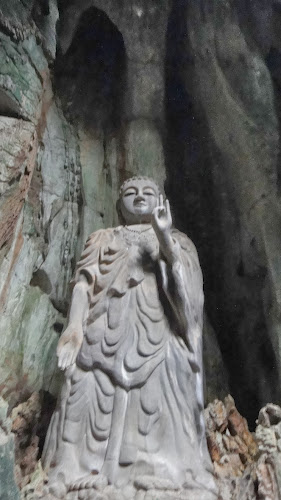
We spent our days going to the beach, taking day trips and climbing up Marble Mountain to pray in caves with Buddha shrines and catch a lovely view of Danang from up high. One morning we all went for a massage. I hadn't gotten one in Vietnam yet, having been scarred by several stories of inappropriate fondling and lesbian groping. But we needn't have worried as our masseurs just simply sat on our backsides. Cheek to cheek contact: lovely! Duong told us later that she clenched and I can only imagine that her masseuse thought SHE was the one getting over-excited.


We visited a beautiful area in the hills called Ba Na where a cable car took us over thick forests until we reached a 'fantasy park.' No, not that kind of fantasy park: a children's one! It was only a half-built one but the kids' play area was open. Remember that brilliant show we used to watch as kids called 'Fun House' with Pat Sharp? I always wanted to go on that but my dad would never let me apply because it "wasn't what good Asian girls did." Well, this play area was just like Fun House and Amir and Imran were having more fun in there than the kids! I, of course, was more mature about it and used Lana for my own benefit: under the pretence of going in there just to keep her company I lived out my childhood dream. (And it was so much better now with my little 1 year old darling niece in tow.)

Our nights in Danang were spent playing cards and laughing at the loser of each game who had to drink neat vodka and whiskey shots. But if you're going to drink, it's best to do it in style so we all went out for a sushi dinner on our final evening and toasted every other jug of Sake with a cry of: "Khong say khong vea!" It's a great phrase and one lots of our friends' families seem to live by - "If you're not drunk, you're not going home!" Maybe that's why we get on so well with them. So anyway, each night we all drank and the children ran around enjoying themselves. Wow, our parents really did miss a trick. When we were kids we used to hate going back to the motherland and our parents would tell us off for not appreciating our background. If only they knew how simple the answer was: buy a bar on the beach!

Mia, our four year old niece, loved Vietnam and cried passionate tears of sadness whenever the subject of going back home to London was raised. It was a delight to watch her charging up Marble Mountain, doing her cute bows when she prayed to Buddha, lecturing us about the correct Vietnamese pronunciation of words and running around in her traditional outfits. Imran's face lit up with joy when she said she wanted to sleep in our bed but it fell as soon as he realised I'd still be in there too. When we'd wake up she would get a big cuddle and enormous smile and I'd get a "Hey.. wasup." But I understand: she's a far more appealing sight first thing in the morning!


Thanks Nugget to you and your family for your wonderful hospitality that week. We had a fabulous time in Danang and I now know for sure that you are the hottest Fittie McVittie in Vietnam AND London!


Just half an hour away from Danang is the fantastic Hoi An. We'd been here on a day trip during the week with the family and thought it was ok but it was when we stayed here at the weekend that we saw how brilliant a place it is and perhaps our favourite in Vietnam. It's a little town, charming and quaint, with historical architecture and streets full of tailors offering to make you clothes. There are sights to see but we didn't bother going to any of them because we were here for just one thing: food. They call Hoi An the gastronomic capital of Vietnam and if you stay away from the tourist cafes, you'll find this is true. Hoi An is the king of Vietnamese salads and we ate a dizzying and delicious variety. We also went to a cooking school here - yes, even Imran! - and had a great time but more about that in Part 3.


On a Saturday night, Hoi An illuminates its river with floating candles and scented flowers. Only the softest lights can be seen in any shop or restaurant, the atmospheric Oriental lanterns giving the whole place a romantic fairy-tale ambience. Relaxing traditional music was being played on Vietnamese string instruments and a dance show was going on at the riverfront. Elsewhere, a random bingo game was being played by locals in a mini Main Square and teenagers were weaving around the streets on bicycles and skates. It was a lovely atmosphere and we had a great time. Even the random little local kid who smacked me couldn't change how much we loved Hoi An! She was a pint-sized six year old who barged past me yelling "Hiya!" (in the martial arts way, not the friendly way) and karate-chopped me across the midriff. We both turned to look at each other and she grinned at me, daring me to do something. Her mother just stared at us both. "Well, aren't you a little f*ck face?" I said to her. I smiled at her mother. "You must be so proud of your delightful brat!" I said in the sweetest tone I could manage. Thankfully not understanding my words, she beamed at me in agreement.


Time to hit the south of Vietnam!

Thursday, 8 March 2012

Va-va-vroom Vietnam: Part 1

They say you should come to Asia and experience the sights, smells and sounds. I don't think the latter should be plural because there's only one sound you hear in Vietnam.

Beep! Beeeeep! BEEEEP!

Every car. Every motorbike. Every second. Vietnam is where people come to die. Well, they don't actually come here TO die but once here they have to accept that there's a good chance they will. This is the land of seemingly more motorbikes than bodies; the country where crossing the road requires the will of a Gladiator and a prayer to every God you can think of before you take that decisive step off the pavement. Once you're walking across the road the best thing to do is just shut your eyes and keep moving, and if you hit the pavement on the other side you can open your eyes in surprise and relief.

There are crazy drivers all over Asia, I know. Mad traffic defines many other Asian cities and there may well be a good chance we go to one on this trip that makes Vietnamese roads look like a farm track in Staffordshire. But Hanoi is the first I've come across where drivers don't know the meaning of looking ahead, preferring instead to look in shops they pass whilst talking on their mobiles, shouting to people sitting on sidewalk about how good their pho is. Of course, I made the mistake of rubbing my eyes on a Hanoi street and mispositioned my contacts. Rendered partially blind, I did what any intelligent person would do and stopped still in the middle of the road and stared wide-eyed at the headlamps coming towards me. Clever. But never fear for Imran saved me Hollywood style. Not Bollywood - contrary to what Imran's hair might suggest - as there were no acrobatic jumps onto buildings and a chorus line dancing suggestively in the rain. I was lucky; shame I can't say the same for the two people I saw get hit by a bike (not fatally, thankfully) because the drivers weren't looking. And in true Vietnamese style, they yelled, they laughed and then they went on their merry way.

For here's the thing about Vietnam: if you make it out alive, it's just frickin' awesome.


After a calm and peaceful stop in lovely but strictly controlled and relatively characterless Singapore City, we hurtled head first into the noise, chaos and vibrancy of Hanoi. Exploring the north of the country we visited Sapa and Halong Bay before heading south to the middle of Vietnam. We spent a handful of days with our sister-in-law Duong's family in Danang and a couple in charming Hoi An; it was then time to hit the highlands of Dalat and finish in the madness of Saigon/Ho Chi Minh City.

The best thing about Vietnam was the availability of juices and smoothies nearly everywhere. Get in, son! The portions are far more stingy than in South America but hey, we're not complaining. In fact, we were usually smiling at the juice makers with big grins and rubbing our bellies whilst passionately crying "Yum yuuum!" until we found out the words mean "horny" in most of Vietnam. They must've thought we were into some real kinky stuff with pineapples and bananas.


At first we found it incredibly difficult to make ourselves understood despite the well-spoken English in a lot of places. Our attempts at Vietnamese were met with a lot of gleeful laughter and mimicking. They key was to speak English in their accent rather than to over-emphasise in our own accents, no matter how silly or borderline racist we felt. So 'sugar' became a loud 'soo-gaaah'; 'beach resort' became the snappy 'beat reezor' and 'massage' became the easily understood 'jiggy jiggy happy time mmmmm.'

As our airport taxi driver charged through the streets of Hanoi - beeping his horn even when the lane was empty - we saw a place that looked similar to India. Lots of green trees breaking up tin shack shops, ditches full of rubbish, throngs of people waiting at tiny bus stops and old ladies walking nonchalantly in the middle of the road. But as soon as we neared Hoan Kiem Lake and the famous Old Quarter - the heartbeat of Hanoi - a true Vietnamese identity began to emerge and put a real smile on our faces. Tiny, plastic baby stools on seemingly every street where people sat sipping the street beer Bia Hoi or slurping bowls of noodle soup (pho); carts full of pyramid-stacked baguettes (probably the most obvious French legacy left after colonialism); stalls of fruit in the middle of congested roads; cyclos, and female hawkers in their trademark conical hats carrying heavy baskets of goodies over their shoulders for people to buy. Motorbikes were not just zipping along the streets but were parked on every available space on narrow pavements, meaning pedestrians had to walk on the roads. Don't make the mistake that we did of thinking a clear bit of pavement is there for you to walk on: this is where the motorcyclists drive if they can't be bothered to stop behind the still cars or bikes in front of them! Red lights are just a suggestion - if they feel it's better to keep on going then they go right ahead.


We weren't in Hanoi at the best time of year and found it was a lot colder than we expected. We only packed one jumper each and found ourselves wearing this every day. Still, we accepted the fact that we're going to be in blazing heat for the rest of this trip and will inevitably find it too hot so we sucked it up. What was a bit harder to suck up was the cigarette smoke. Everyone seems to smoke here and their fumes combined with the traffic fumes makes for a horribly heady combination. I guess we're just so used to the ban in London now that we've forgotten what it's like to leave a bar or restaurant with your hair and clothes stinking.


What's great about Hanoi is that you see the stereotypical Asia you imagine. The best thing by far to do is to absorb every bit of the atmosphere and culture. Watch the people; talk to as many as can understand you and embrace their ways. That's what made Hanoi fun for us. What made it boring for us was visiting the recommended tourist sights: Ho Chi Minh's mausoleum and old house and a water puppet theatre show. Reading about Ho Chi Minh's life and what he did in Vietnam is far more fascinating than seeing his dead body (which, incidentally, we didn't even get to do as we rocked up in the afternoon to find out it's only open in the mornings - rookie mistake.) And as for the water puppet theatre show... well, we just didn't get it. Think Punch and Judy in a swimming pool. The puppet handlers are extremely skilful and the puppets themselves are intricate and wonderfully made. The story the show tells is quite interesting, too. But it feels like it's more for kids and the soothing traditional music combined with a jet lag hangover put us right to sleep.


It's the people that make Hanoi what it is. Whether visitors love them or hate them - and it's always one or the other - they make for entertaining viewing. The women trying to sell tourists stuff are really wily, quick and clever. Don't want to buy any fruit? - tough; the baskets are on your shoulders and the hats on your head before you can blink. Then they convince you you'd love a photo of this for which you obviously have to pay but they'll throw in a bag of pineapple slices anyway because they like you. Credit to them for being smart - we loved that about them and hey, we love pineapple!


The men in Hanoi weren't quite so nice, though. The ones that tried to sell us things were aggressive and their behaviour bordered on harassment. We didn't mind too much as we knew to expect this but I can imagine they'd be seriously annoying for less chilled-out people. They shouted at us if we walked away from them; belligerently asked "Why not?" when we said we didn't smoke after they'd offered us lighters. And they were sexist! I lost track of the number of times I said no to something only for them to continue hounding us until Imran made the final decision. This is Asia, for crying out loud - how could I forget that the man is the boss?! Even saying the word 'bra' in public here is shameful, let alone burning one in the style of those brazen, Western feminists with their terrible ideas.


But ultimately, Hanoi is exciting and full of personality. It's loud, it's gritty and it pulls you right into its way of life. It's brash but at the same time charming. It has so much going on if only you look beyond the obvious and deep into the nooks and crannies. We loved it.


Halong Bay is often on lists citing natural wonders of the world and it really is remarkable. It's 1500 sq km of blue jade waters flowing serenely around massive limestone rocks covered with lush greenery. Technically, they're not rocks but little islands and there are around 2000 of them. Visitors generally come here for one or two nights and stay on a boat; we were there for two which meant we also got to visit an area by Cat Ba National Park, a silent mass of water and caves away from the boat traffic in Halong Bay. There are islands which you can climb, such as Ti Top, for a scenic view of the bay from high up but it doesn't really add to the experience much. Similarly, Sung Sot Cave is full of marvellous rock formations in particularly entertaining shapes if you have as crazy a guide as we did, but it's not unmissable. The best thing about Halong Bay is the kayaking. Again, we weren't there at a time to witness sunny skies and be able to jump in warm waters but at least it was clear for the most part and the cooler temperatures made for better kayaking. It was so much fun to paddle through dark caves and come out the other side into another secluded mini bay, surrounded by tall rock and families of monkeys clambering over the islets. All we could hear were birds chirping and the water rippling beneath us as we glided across. Very peaceful; very beautiful. Despite the enormous numbers of boats in Halong Bay, it was surprisingly quiet and the boats actually added a lot of character to the visual scene due to their unique styles. There were, of course, party boats for the young backpackers but aside from the occasional burst of karaoke song in the distance, we didn't hear much.


I don't know what it is about cruises but we always seem to meet great people on them and they generally tend to be American! Travelling is always made more joyful an experience when you meet nice people. It gives you a better perspective of the world from the different views of the different people living in it and it teaches you about your own stereotypes and prejudices. I love the fact that, despite having American friends already who we think are awesome, we continue to meet more on our trip who defy that image of being lost in their own world with an arrogance of their own culture and an ignorance of other cultures; those who are intelligent and, quite frankly, admirable. I know the examples on Jerry Springer and the irritating muppets that are the Sex & The City girls aren't the best but there are some who think beyond their own world and are wised up to the shenanigans of their government.

I mentioned our crazy guide, right? His name was Man. Cue lots of unfunny jokes along the lines of: "Hey man, how's it going, Man? It's my main man, Man!" He loved it, though. On the drive from Hanoi to Halong Bay he told us lots of interesting facts. One: his mates don't like his singing and every time he partakes in some karaoke, there is silence at the end of his performance. Not a good sign. I know that from experience. However, he loved to sing (as everyone in Vietnam seems to!) and proceeded to give us a rendition of a traditional folk song. He wasn't half as bad as he made out. But in a culture where it's not good to be bad - unlike in ours - I could see why his friends weren't impressed and why he'd be better placed at a karaoke night with the Lakhas. Two: Vietnamese people (or, I suspect, just him) call the loo "The Happy Room." This is because when you need to use it your face is all scrunched up and tense but, when you've been, it's relaxed and happy. What an awesome dude - his Fun Facts are way better than mine!


Dinners on the boat consisted of feasts of deep-fried dishes. I could count on two fingers the things that weren't dripping in oil and those were the fruit and the water. We understood that this was their way of giving us the best of what they could offer and it was pretty tasty, but after three days we were completely done with drinking grease and needed to get back to our favourite juice bar in Hanoi! On the plus side, the brilliant bartender on the boat made us smoothies as often as we wanted and during one of our cooking classes we made delicious summer rolls - fresh rice paper rolls filled with lettuce, herbs, rice noodles, tofu or meat and strips of carrots and pineapple. Delicious. We also made some pork spring rolls but obviously didn't eat them. Imran had a natural knack for stuffing and rolling (ahem) but I felt very sorry for the people who ended up eating my monstrous creations.


We sailed by a floating fishing village on the day we went to Cat Ba. The people live, work and go to school on the water and their homes are beyond basic. They have barely a roof or walls but they do have the most important luxuries (and I'm not being sarcastic): generators so that they can have electricity and television. We kayaked around this picturesque and tranquil area but it was ruined by one thing: rubbish. It was actually quite disgraceful. This gorgeous natural wonder was littered with plastic bottles, bags, snack packs, fags and even shoes! I don't know if the culprits were more the tourists or the locals but going by what I witnessed during some careful watching, it's the locals and sub-21 year old Western lads who have the least regard for the environment. The captain of the boat that took us to Cat Ba had his very young son on board who threw the skewers from his lunchtime meat overboard as he finished each one. You've got to think he learned that from someone. It's a real shame and will become a big problem if something isn't done. While a lot of Asia might not give a monkeys about throwing litter anywhere, Halong Bay needs to literally clean up its act if it wants to retain its UNESCO privileges.


Another stop we made in this region was at a pearl farm. It was pretty cool to see how pearls are harvested and the sheer levels of perfection each pearl has to meet to be considered worthy. As expected, we were encouraged to buy some. The poor lady in the shop made the mistake of thinking Imran was anything but inappropriate and a joker. "Don't you want to give your wife a pearl necklace?" she asked sweetly.

Imran didn't flinch. "I always offer to give her a pearl necklace and she tells me to get lost!" he replied. The lady's face dropped.

"Oh, that's not nice," she said, turning to me. "If your husband wants to give you a pearl necklace you should let him. Any other lady would love to have one - you must be crazy to say no!"

She obviously doesn't know my husband.


Onwards with our journey!


Wednesday, 15 February 2012

(Singapore) Sling Your Hook, London

There's no rest for the wicked when the rest of the wicked don't rest. Got that?

Far from being a time to relax and recharge, our three weeks at home were as hectic as any we could remember. No room for jet lag when your Homies get you out clubbing the day after you land. We wouldn't have had it any other way, of course. It was great to see family and friends again and spend time catching up. But even with every lunchtime and evening booked solid, we still didn't get to see everyone that we wanted and left probably more exhausted than when we were travelling!

Many people asked us if we'd changed during our time away. I'm not sure. I think we were starting to change our priorities and outlook on life a while ago but our trip just confirmed that those changes are right for us. Still, old habits die hard and it's very easy to slip back into former patterns so we were desperate to get away again to cement our change in mindset. We definitely noticed how much more chilled out we are; how we actually feel sorry for people rushing around in London, stressed and moody and angry about irrelevant rubbish. I had a driver behind me shout obscenities because I slowed down to stop at a traffic light when it was about to turn red rather than zoom through it. He found me even more irritating when I just grinned at him. Poor guy: hope the extra thirty seconds he'd save by running red lights are worth the carcinogenic stress hormones. One big surprise has been our new-found love for hiking and we're already planning trips to Wales and the Lake District to climb up and down stuff. Well.. you wouldn't really go to Wales for any other reason, would you? (Aisha and all other Welsh friends: that's a JOKE, I promise!)

When we first arrived back in London, it felt like we were surrounded by giants. Why had we not noticed before how tall average Brits are?! It was so much more fun being on a continent with other vertically challenged people. The view is very different from way down here.

Imran's been getting a lot of attention from the ladies with his new hair do. I don't know whether it's the swagger that comes with having an afro or the fact that strange ladies out there like the Bollywood look, but he enjoys being eyed-up enough to keep the hair going for our Asia trip when he was previously adamant he was going to have it cut. Watch it expand in size photo by photo over the next four months!

So what's the summary for South America? The quickest verdict would be: "Bo shank." But I'm a details gal as you know and 'quick' ain't in my blog vocab (no jokes about being slow, please), so here's a run down, my style.

Our favourite places were Patagonia, the Amazon and the Galapagos, in that order. We would go again to all of these in a heartbeat. The nicest locals were in Mexico, closely followed by Chile. The latter served us the best wine and the former was home to the best food overall. Saying that, the ceviche in Peru's Lima and Nasca was perhaps the single best dish we ate. Rio was the best city we visited and Brazil as a whole was perhaps the best country. Peru is certainly the most interesting country both historically and culturally, and the Inca trail was our greatest achievement. I think the Argentinians might've been a bit nicer to us had there not been the matter of a little tussle called the Falklands War. This is a continent defined by easy-going people and dance. The people are so relaxed everywhere you go and this is a wonderful quality; however, make no bones about it, in a couple of places this feels like a poor work ethic bordering on laziness. Whether in England or Peru or anywhere else, teenagers are the same the world over: loud in their big groups, playing music through their mobile phones with silly haircuts and fashions (how OLD does that make me sound?!) Of course, the difference in South America was their genuine respect for adults at the same time as their annoying ways. It's a sincere continent. They live to enjoy themselves and that's why music and dance is such a big part of their lives in every country. Who wouldn't have fun there? Thank you, South America: you're unique, full of personality and character, and as Imran's old work mates would say in their impression of him: "You killed it, yeah."

I write this post at 8am in our hotel room in Singapore. The jet lag really does screw up your head and we've been up for hours, having already had breakfast in bed, been to the gym, meditated and tried to stand on one leg with our eyes closed for more than twenty seconds (if you can't do it, your body is older than it should be at 30!) Our heads are pounding and we feel like we want to puke, thanks to Imran's insistence that a 6am gym session will help with jet lag - it really doesn't! But it's 30 degrees outside already and we have a day of eating black pepper crab at hawker stands and drinking chocolate Martinis/Singapore Slings ahead of us in this great city. Tomorrow we head off to Vietnam and our trip really begins...

Asia, get a-ready 'cause the Lakhas have landed. Let the travels recommence!


Wednesday, 8 February 2012

Brazil Part 3: Salvador

In my last post I said I would write the final Brazil post on the plane journey home, didn't I? Obviously this didn't happen. It wasn't a case of me slacking, promise. It's just what happens when you and your hubby have a recent UFC event to discuss, and the sight of a UFC fighter at the airport and the film 'Warrior' on the plane movie listings get you a bit too juiced up to type. But it's actually a good thing I didn't because I left South America feeling philosophical and waxing lyrical about the meaning of life, and when I told Imran that this would be the tone of my post, his smile said "That's fine, dear" but his eyes said "Bore off."

Anyway, luckily for you, the English winter has frozen my brain cells so I can't think too deeply. But I also can't be outside for more than 30 seconds for fear of my teeth falling out due to the impact of chattering; therefore I have nothing else to do except write this post. So let's get on with it. And for once I'll try to make it quick (odds are not in my favour so bets against me succeeding are safer. Keyboard diarrhoea, and all that.)

After our amazing week in the Amazon rainforest we went to the state of Bahia in the northeast of Brazil. This was it: the final stop on our journey, and we just wanted to dance and lie on a beach. Salvador and its nearby island Morro De Sao Paulo fit the bill. We'd heard a lot about the nightlife and party culture in Salvador so had told friends to join us out here - nobody did and it was lucky they didn't because we actually found there was nothing to do. The 'nightlife' in the Pelourinho district was more a case of locals simply standing in the cobbled streets 'til late, drinking Caipirinhas while loud music blared out from speakers in open cafes. Fun, atmospheric and great to be part of, but certainly not 'partying' in the sense that we were expecting. Saying that, there may well have been a great clubbing culture in the Lower City but we didn't go there; we were told to avoid it and stay in the Pelourinho as there was a 99% chance we'd be mugged. Now I don't know about you, but that doesn't sound like a favourable statistic to me. Upon reflection, I'm not sure these scare stories were entirely accurate and if they were, I learned a lot about the local life to understand why this was the case. In order for you to understand, you need to know about the history of Salvador. Lucky you: it's Fun Fact time! (I'm well aware some people may consider FF time to be BB - bloody boring - but it's what you have to put up with when this blog is written by a GG: Geeky Gal.)


Salvador is the largest city in the northeast of Brazil and was the very first colonial capital in the country. This is the place where the first slaves from Africa were taken and sold. Indeed, there is a street called Largo do Pelourinho where slave auctions took place and the Pelourinho word itself translates as "whipping post." Brazil was the last country to abolish slavery ('slavery' as the historical event that we know it; obviously slavery in a variety of forms existed before this and still exists in the present day) and the state of Bahia alone traded twice as many slaves as the United States.


I find African history extremely interesting. That's thanks to my amazing legend of a GCSE English teacher who noticed my keen interest in our exam study book "Roll of Thunder Hear My Cry" and told me to read "Roots" and "The Bluest Eye" during my summer holidays. (See? GEEK.) There have been many major atrocities in the world, there are plenty more happening in the present age, and the English have a pretty shameful past when it comes to colonial brutality. But slavery in the form of human beings taken from Africa is up there amongst the very worst and there is no place that forces you to confront its reality in the New World better than the Afro-Brazilian culture capital that is Salvador.

Slavery was an act that went on for centuries and the far-reaching impact is often unconsidered. Hundreds of years of inexcusable treatment, torture, and belittling; hundreds of years of brainwashing, dehumanising and discouraging marriage between slaves and the creation of a nuclear family unit; hundreds of years of denying a people a shared ancestry and unity: all of these combined create insecurity, angry resentment and self-fulfilling prophecies that simply exacerbate certain negative images our world holds. In the modern day, throw all this into the melting pot with the common effects of economic hardship in a materialistic world, fewer educational attainments and a high incidence of broken families and you'll have a bit more understanding of the chain-reaction effects of slavery. While it may be correct to say that self-sabotage in communities influences the world’s perception of others and individuals need to take responsibility for their own future without laying all blame on this abhorrent history, it's equally as valid to point out that slavery ended in relatively recent times: only 100+ so years ago; a third of the time for which the slave trade existed. It is said by historians and academics that, after just one generation of suppression, a fear and inferiority "settles in the genes" and becomes the root of all issues - it requires a good few hundred years to get rid of it. This is even more difficult when people within a community with a massively conflicted identity are killing each other and using old slave insults such as the n-word in today's world where opportunities are institutionally lacking for them anyway. It’s most simply and eloquently explained by this quote that I read: “A neighbour beat a man over the head for several hundred years and stopped. The abused was brainwashed to beat himself and has been doing it for 50 years, and his oppressor tells him that he should stop the stupidity when he himself could not do it for hundreds of years.” There can be no respect from others without self-respect first.


And that's where Salvador comes in.

Salvador is a city with a thriving African culture, a beautiful blend of African heritage and Brazilian tradition. Here the local people - nearly all of them African descendants - keep alive old religions like Candomble as well as classic forms of dress and music. They show how sweet fusion can be when they celebrate these conventions at the same time as living by the inherently Brazilian traits of 'laid backness' and believing life is too short not to have fun. Salvador has been informally named 'The Land of Happiness' and for the reasons mentioned above I would wholeheartedly disagree with this. But it is most definitely the land of buoyancy and resilience. No doubt the 'Land of Happiness' label was created amidst blissful ignorance by people who didn't scratch below the cultural surface. The same people probably, who, just like me and Imran, didn't really venture outside the safety of the Pelourinho where hoardes of tourist police ensure visitors are treated like Gods. We found out after our visit that the rest of Salvador epitomises poverty; that local people endured forced removal from the Pelourinho (or Pelo) to make way for tourists and now live in severe poverty on the city's periphery. Tourists 99% likely to get mugged in other parts of the city? I can see why and I can't really blame them.

Let's up the tone of this post a bit now, shall we? I think I'm depressing myself just by writing it; I'd hate to be the one reading it! All positive stuff from here on, right?

Tuesday night is the big party night in Salvador and when we arrived at midnight, there were food stalls in the main square and people dancing to live bands and socialising everywhere. We walked around the Pelo and found the streets were cobbled, steep and lined by very colourful houses. In the daytime the pockets of deprivation were more visible but the personality of the people was stamped everywhere regardless. We saw a large amount of fantastic artwork. My favourite was this one which I obviously had a very deep interpretation of but it's not one to which you need to be subjected. Not all the artwork is directly related to slavery: much of it also depicts Brazilan wildlife, Bahian dancing and the Afro-Brazilian martial art Capoeira. We met one artist who painted pictures of nothing but women's nude backsides! He obviously had a great appreciation for this body part. He "likes big butts and he cannot lie; you other brothers can’t deny…"


The biggest attraction is a church named 'Igreja Sao Francisco' which we didn't think would be anything special relative to all the other spectacular churches we'd seen in South America thus far. But it was actually very impressive as the whole interior is bathed in gold leaf and covered in gilt. Aside from this church and the Afro-Brazilian museum dedicated to ancient African religions, there was a food museum dedicated to the famous Bahian cuisine (I obviously visited this) but that was it. Those were all the sights. Fine with us as the sights in which we're most interested in any place are the local people going about their daily business, and Salvador has character in abundance.


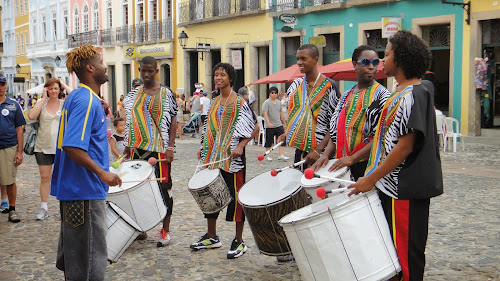
Every evening, just before sunset, throngs of people take to the streets to drink beer and Caipirinhas, catch up with their mates or practise a bit of Capoeira. Groups of men all around the Pelo drag old plastic tables and chairs out onto the bumpy roads, all of them wearing fedoras, and sit for hours playing games like Dominos and Draughts. We watched one game of Draughts that was played using the caps from plastic bottles and a friendly English-speaking guy told us the old man playing was unbeaten for 30 years. Imran was very tempted to challenge him but they were playing according to some unknown rules so he decided against it! We danced along with the citizens in the middle of the avenues to the many random bands that appear out of nowhere just to add a soundtrack to the vibrant atmosphere - drum bands in Brazil are always awesome anyway but we particularly liked the group of teenagers with trumpets and saxophones who played traditional music mixed with Lady Gaga tracks!


We tried to go to a Samba class but should have remembered where we were: if a class is advertised to take place at a certain time and day, don't expect it to happen on time in easy-going Brazil… in fact, don't expect it to happen at all! So no Samba for us. We did, however, go to a Capoeira show and it was by far the BEST quality of Capoeira we've ever seen. These guys were incredible. In the world of MMA (mixed martial arts, for non-UFC fans) Capoeira is considered a bit of a joke because it combines the skilful combat techniques with dance. Some UFC fans don't think such rhythm makes for a very manly martial art. But let me tell you, the guys we saw at this show could kick anyone's arse without batting an eyelid and then happily cartwheel away while their opponent lay in a sobbing heap on the floor.


The national dish of Salvador is the 'moqueca.' This is a seafood stew where all the ingredients are cooked in one big pot: onions, garlic, tomatoes, fresh coriander, peppers, seafood and coconut milk. I had one which was absolutely beautiful but after my visit to the Food Museum I found that palm oil is the most important ingredient (and masses of it, too) so I stopped eating it as nobody could tell me if the palm oil was from sustainable rainforest sources or not. But the good thing was the moqueca that I did have was the best in the entire Pelo so at least I didn't miss out by not having any more!

As fantastic as all this was, it wasn't really enough to fill up four days and hyper Imran was starting to get really bored. He needed to be entertained. The answer lay in Caipirinhas (which he doesn't realise actually means I'm the one about to be entertained by his drunken antics!) But luckily for his liver, our visit to Salvador was timed perfectly (albeit accidentally) because the second Thursday in January is the annual celebration of the Lavagem do Bonfim. It's the second biggest celebration in Salvador after Carnival but it's pretty much the same thing without costumes. The festival is, most simply, a celebration of the syncretism between Catholicism and African religions. Wherever you are in the city, you'll be awoken at 8am sharp by the sound of drums as the faithful get ready for mass at a church in the Lower City. Women dress in traditional outfits consisting of turbans and large round skirts and lead a flower-filled procession through the city for 4 miles to reach the Bonfim Church. The church steps are washed and thousands of ribbons are tied to the gates. These ribbons represent wishes people have made. Many people tie them onto others' wrists with three knots; as each knot is tied the person makes a wish for their future. The ribbons cannot be removed - you must allow them to naturally come off over time and when they do, that’s when your wishes come true. My ribbon has already come off and 2 of the wishes did come true.. but I don't know if praying twice for Jose Aldo to win his next UFC fight was really getting into the right spirit of things! My other wish was that Bruce Willis would one day smack my arse and tell me he's "just a love machine" but I haven't experienced that one yet.


We went down the city's huge 'Elevator' to the celebrations at around 10am and the streets outside of the Modelo Market were already heaving with partygoers. Everybody wears white and slowly follows the parade of musical floats all the way to the church. It generally takes all day as there are frequent stops (every 30 seconds) to dance and eat the street food. It's a non-stop shindig with beer, Caipirinhas, skewers of barbecued meats and chunks of fresh sugar cane being consumed by the bucket. We were prepared to be showered with beer by jolly drunks and to snack and dance but it was so unbearably hot and crowded that we couldn't face the thought of going all the way to the church and back, so we sat and watched the people having a rambunctious time instead. It was a great festival and we were certainly glad to be part of it but I don't think I could ever do Carnival in Brazil. It's just sheer madness and - dare I say it? - is bordering on boring for me personally, as I can't stand around in massive crowds watching people boogie on floats (with no room to dance myself) for more than a couple of hours before thinking: 'Anything else to do now?' Perhaps I need to drink like Imran does and I'll find time passes by a bit quicker!


Taking a vomit-inducing three-hour boat ride from Salvador, we arrived on the little island of Morro de Sao Paulo. It was pouring with rain when we got there but it still looked beautiful. The place is tiny with just one long street of bars, restaurants, shops and hotels all along the beach. Cars are forbidden (there’s not enough room for them anyhow) and people carry suitcases around the island in wheelbarrows. The ocean is a dizzying variety of blue shades with patches of lush green forest and palm trees breaking up the coastline. EVERY single man here wears speedos. Imran felt uncomfortable being a solo minority and I wondered if I could manage to convince him to get some purely for my own entertainment. (He didn’t. Damn it.) We spent most of our first day visiting all the bars to ask if they were showing the UFC event that was on TV that night. We thought it'd be easy to find somewhere as the event was actually taking place live in Rio de Janeiro but no, nobody seemed to have any interest. What was wrong with these people?! Brazilian people love mixed martial arts more than anyone else on the planet alongside the Japanese - hell, they even invented some of the arts! Dejected, we headed back to our hotel and whaddya know, we passed a little kiosk tucked away behind the main street and saw old UFC events being shown on the screen. "Are you showing tonight's UFC event?" we asked, holding our breaths with anticipation. The owner, an Italian named Alessandro, looked at us as if it would be a crime to NOT show it. My kinda guy. "Of course," he replied and then had to run and hide in the kitchen as we screamed and bear-hugged him. So forget the beach: our first night was as fantastic as it could've been as we watched UFC Rio until 4am in a bar packed with other fans so fervid they made us look indifferent and uninterested.


Although happy to relax on a beach for four days, we needed some kind of activity during the days but there was only surfing. There was really no point booking any lessons, though; it was highly unlikely anyone would turn up to teach us! We did go to the hill at the top of the island from where we threw ourselves off a platform and zoomed down on a zip line and landed amongst the frolicking people in the sea. That was fun and fulfilled a childhood dream to pretend we’re contestants in the old Gladiators show doing the Eliminator.

The evenings are the best times in MSP and the island is known for its ‘nightlife.’ It’s a ‘touristy’ island in the sense that people come here for a holiday rather than living here. But it’s not touristy when you consider how few foreigners come here; on the contrary, the majority of visitors are other Brazilians and everything is tailored towards helping and pleasing them. Finding people who speak English is a difficult task – even in hotels - but who cares in such beautiful surroundings? All we cared about was knowing the Portuguese for our most important and frequently used phrases: “Can you make me a fresh smoothie, please? Thanks, duck.” As the sun sets, the beach comes alive with people playing football, folleyball and walking on tightropes (random, I know.) We sat on the beach watching a group of guys playing foot volley in teams of two. At first we were astounded at how aggressive they all were, yelling and screaming at one another (teammates included) with spit flying from their mouths. We knew Brazilians were passionate about their sport but this was something else! Perhaps it was because they were playing tournaments for money. Perhaps it was because they were madly competitive. Perhaps the players just happened to all be douche bags. We weren’t sure. One guy on the sideline shouted something and another responded equally vocally. Suddenly, the yelling escalated and these two guys charged towards one another, bellowing with animated fervour. Imran and I stared at each other, eyes wide with horror because it looked like a severe beating was about to be handed out to one of them. They got closer and closer and… shook hands. What?! Then they hugged. The whole time they were still barking at one another and continued to do so as they walked away. Turned out that they were only saying hello but their passion for the game combined with their militant-sounding Portuguese accents meant they sounded like they were fighting. Genius.


Literally on our last day in MSP, we ran out of money. We’d used up the last of the cash we had, all of the cash machines on the island were out of order and the independent restaurants and bars wouldn’t take card. For the very first time on this trip, we had to watch the pennies like backpackers instead of flashpackers and had to choose between eating and drinking. What did we spend our last dollars on? Smoothies, of course. But with Malibu thrown in. Food in a glass with a buzz: perfect!


As darkness fell people ate their dinners on the beach edge while locals with wheelbarrows full of alcohol and fruit set up stalls by the ocean. These are the 'bars' that all line together to make a border around the 'nightclub' - essentially just a patch of beach. A DJ played Brazilian music with a few American pop songs thrown in every so often and everybody was happily having fun. It was the most chilled out and simultaneously lively party we've been to in South America. We walked along the shoreline in the warm early hours, stopping to write 'Amber & Imran South America 2011-2012' in the sand. We lay down on this and stared up at the stars just talking for ages about our trip. Yes, it was cheesy, romantic and VERY unlike us but it was as perfect an end to our whole trip as we could've hoped for. Everything was ok. Everything was good. We were happy. We were looking forward to going home to see our friends and family. We'd had the best experience of our life... and the greatest thing was, we weren’t even halfway through.

 Goodbye, South America. You rocked our world.